Free sample · Page 1 of 1
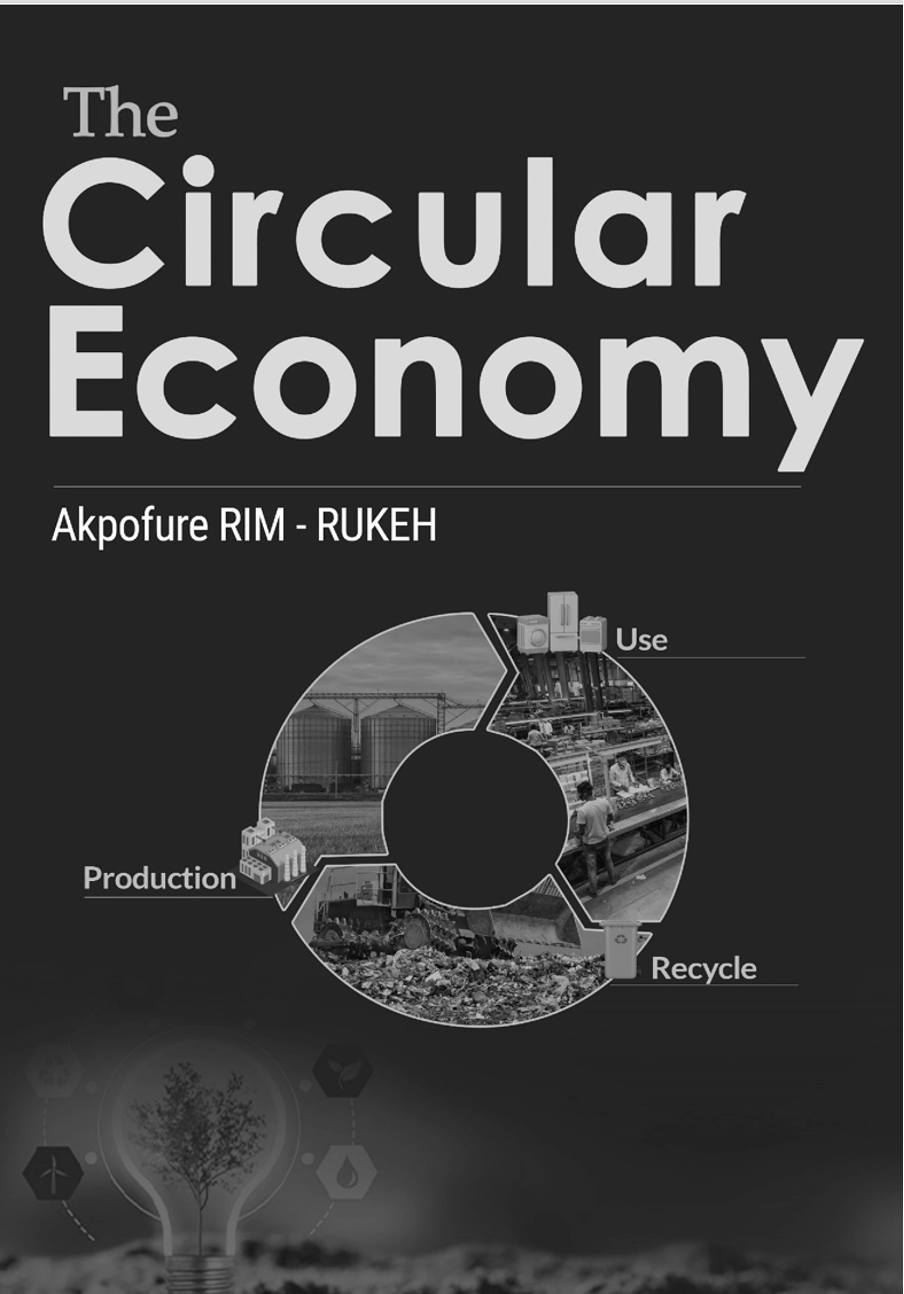
THE CIRCULAR ECONOMYby Akpofure RIM-RUKEH
Chapter 1: Introduction to the Circular Economy
Provides a general introduction to the meaning of the Circular Economy (CE) and its benefits. It highlights the distinguishing factors between the traditional linear economy and the circular economy.
Chapter 2: Drivers, Enablers, and Barriers
Discusses the critical drivers, enablers, accelerators, and barriers associated with the transition to a Circular Economy.
Chapter 3: Circular Economy Models
Discusses the fundamentals of Circular Economy models, detailing specific types such as circular inputs, the sharing economy concept, product-as-a-service, product use extension, and resource recovery.
Chapter 4: Materials, Processes, and Technologies
Focuses on the materials suitable for a circular economy, alongside the processes and technologies required to enable circularity.
Chapter 5: Electronics and ICT Sector
Focuses on the application of circularity within the electronics and Information and Communication Technology (ICT) sectors.
Chapter 6: Battery and Vehicle Industries
Devoted to understanding and applying circular economy principles within the battery and vehicle industries.
Chapter 7: Packaging Industry
Focuses on implementing circularity in the packaging industry to reduce waste and improve material recovery.
Chapter 8: Plastics Industry
Discusses the challenges and opportunities of applying circular economy principles within the plastics industry.
Chapter 9: Textiles and Clothing Industry
Describes the application of circular economy practices within the textiles and clothing industry, addressing fast fashion and material reuse.
Chapter 10: Construction Sector
Dedicated to understanding and implementing circular economy strategies within the construction sector.
Chapter 11: Food and Food Waste Sector
Devoted to understanding circular economy applications in the food and food waste sector to minimize environmental impact.
Chapter 12: Life Cycle Assessment (LCA)
Dedicated to understanding Life Cycle Assessment as a critical tool for measuring and achieving circularity.
Chapter 13: Sustainable Consumption and Production
Introduces the reader to the concept of the circular economy and its relationship to sustainable consumption and production (SCP).
Chapter 14: Circular Economy and Bioeconomy
Devoted to understanding the nexus and synergies between the Circular Economy and the Bioeconomy.
Chapter 15: Circular Economy and the SDGs
Introduces the reader to the relationship between the Circular Economy and the Sustainable Development Goals (SDGs).
Chapter 16: Eco-Labelling
Discusses the contribution of Eco-Labelling to the promotion and success of the Circular Economy.
Chapter 17: Cleaner Production
Discusses the concept and practical application of Cleaner Production (CP) in industrial processes.
Chapter 18: Circular Economy Practices in Nigeria
Focuses on the current landscape, challenges, and opportunities for Circular Economy practices specifically within Nigeria.
Chapter 19: Global Examples of Circular Economy Practices
Discusses successful global case studies and examples of Circular Economy practices in action.
That's the end of the free sample
Keep reading THE CIRCULAR ECONOMY
Get the full book as a printed copy.
Buy the full book · ₦8,000Not ready to buy?
Get our weekly briefing and hear when new books land.