
Free sample · Page 1 of 1
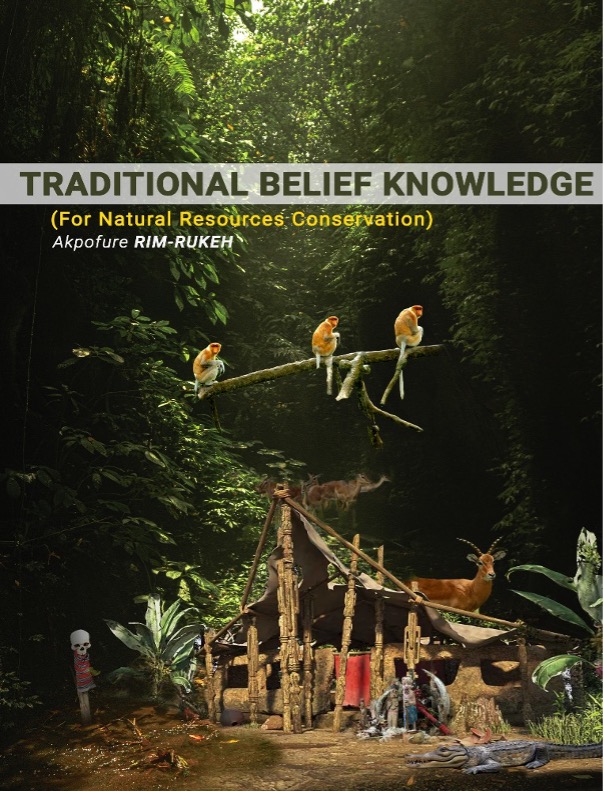
TRADITIONAL BELIEF KNOWLEDGE For Natural Resources Conservationby Akpofure RIM-RUKEH
Chapter 1: Introduction
Introduces the meaning and dimensions of Traditional Belief Knowledge (TBK), also known as traditional religious beliefs (TRB). It discusses how this knowledge is applied in areas like medicinal needs, food supply, conflict resolution, and spiritual growth, alongside its basic characteristics, key elements, and benefits.
Chapter 2: Objects of Traditional Belief Knowledge
Examines the African societal classification of certain objects and places as sacred. It details the spiritual implications of sacred groves/forests, totems, hills/mountains, caves, waters, and trees, and discusses the strategy of implementing sanctions through the placement of taboos.
Chapter 3: Traditional Belief Knowledge Practices in Nigeria
Provides specific case studies of local communities in Nigeria where traditional belief practices are actively exemplified. It covers communities across Delta State (Orogun, Ode-Itsekiri, Useifurun, Ujewvu, Orohoakpor, Ovu, Umuaja, Okorobi, Ase), Anambra State (Akwa, Idemili), Abia State (Umulelu), and Bayelsa State (Biseni and Osiami).
Chapter 4: How Traditional Belief Systems Contribute to Conservation of Natural Resources
Discusses the variety of consistent resource conservation and management strategies developed by traditional African societies. It outlines environmental principles that regulate human interactions with nature and presents evidence that these belief systems actively contribute to conservation.
Chapter 5: Challenges of Traditional Belief Systems in the Conservation of Natural Resources
Addresses the documented decline of sacred forests and the resulting risk of losing indigenous knowledge and endemic forest diversity. It details the factors affecting traditionally protected areas and the challenges faced in protecting these landscapes.
Chapter 6: Strategies for the Protection and Promoting of Traditional Belief Knowledge
Examines the profound impact of globalization and Western ideologies on traditional practices and indigenous knowledge. It argues for the reversal of this cultural erosion and presents actionable strategies for protecting and promoting traditional belief knowledge.
Chapter 7: Policy Direction for the Protection and Promotion of Traditional Belief Knowledge
Presents a policy framework aimed at preserving and disseminating innovations based on traditional belief knowledge. It outlines the goals, objectives, guiding principles, and scope of a policy designed to foster continuous traditional innovation and creativity for national development.
Chapter 8: Connecting Traditional Belief Knowledge to Sustainable Development Goals
Explores the vital connection between traditional belief systems and the 17 Sustainable Development Goals (SDGs). It highlights how indigenous knowledge contributes to eradicating poverty and hunger, promoting health, education, gender equality, clean energy, responsible consumption, climate action, and the protection of life on land and water.
That's the end of the free sample
Keep reading TRADITIONAL BELIEF KNOWLEDGE For Natural Resources Conservation
Get the full book as a printed copy.
Buy the full book · ₦8,000Not ready to buy?
Get our weekly briefing and hear when new books land.