
Stand first
Infrastructure has always been the foundation of civilisation, shaping how societies grow, economies prosper, and communities thrive. Yet the demands placed on infrastructure have changed fundamentally. Today, governments, engineers, investors, and communities expect infrastructure not only to function safely and efficiently, but also to support climate resilience, social inclusion, economic prosperity, environmental stewardship, and public trust.
Environmental, Social, and Governance (ESG) principles have transformed expectations for responsible investment and sustainable development. However, translating these commitments into infrastructure that consistently delivers long-term public value remains one of the defining challenges of modern development.
This three-part series explores that challenge. It argues that the future of infrastructure lies not in replacing existing engineering standards or sustainability frameworks, but in integrating them more effectively. It introduces the Function, Impact, Prosperity, Resilience, and Equity (FIPRE) Framework as a practical decision architecture designed to help governments, engineers, investors, and communities bridge the gap between sustainability commitments and infrastructure outcomes.
Introduction
Infrastructure is often described as the backbone of development. Roads connect producers to markets, ports facilitate trade, power systems drive industrialisation, water networks protect public health, schools and hospitals build human capital, and digital infrastructure increasingly underpins participation in the modern economy. Every nation, regardless of its level of development, depends on infrastructure to create opportunity, improve quality of life, and support long-term prosperity.
Yet infrastructure is much more than a collection of physical assets. It is a long-term societal investment whose benefits—and failures—can shape generations. Decisions taken during planning and design influence economic competitiveness, environmental quality, social cohesion, fiscal sustainability, and resilience to future shocks for decades after construction is complete. A bridge may stand for one hundred years; a poorly planned urban transport corridor may determine patterns of inequality for equally as long.
This reality has profound implications for how infrastructure should be conceived, evaluated, and managed. Success can no longer be measured solely by whether an asset is delivered on time, within budget, or according to specification. Increasingly, success is judged by whether infrastructure creates enduring value for society while adapting to changing environmental, economic, and social conditions.
The central argument of this volume is therefore straightforward: better infrastructure begins with better decisions. Technical excellence remains indispensable, but it is no longer sufficient on its own. Infrastructure must also be planned, financed, delivered, and managed in ways that strengthen resilience, promote inclusion, protect natural systems, support sustainable economic growth, and maintain public confidence.
This is not a call to replace engineering principles with sustainability objectives, nor to substitute ESG for sound technical practice. Rather, it is an argument for integrating these complementary perspectives into a coherent approach to infrastructure decision-making. The chapters that follow examine why this integration has become essential and why achieving it remains one of the greatest challenges facing infrastructure professionals today.
Why Infrastructure Matters
From the earliest civilisations to the digital economies of the twenty-first century, infrastructure has been a defining determinant of societal progress. Ancient irrigation systems transformed agricultural productivity. Roman roads enabled trade and governance across vast territories. Railways accelerated industrialisation, while modern electricity networks, telecommunications, and transport systems have become indispensable foundations of economic competitiveness and social well-being.
Today, infrastructure remains central to virtually every national development objective. It enables access to education and healthcare, supports employment and industrial growth, facilitates domestic and international trade, improves food security, and enhances the quality of life for millions of people. It also plays a critical role in responding to some of humanity's most pressing challenges, including climate change, rapid urbanisation, demographic growth, and technological transformation.
Recognising this importance, governments around the world continue to invest heavily in infrastructure as a catalyst for development. Multilateral development banks, sovereign wealth funds, pension funds, and private investors increasingly regard infrastructure as both an economic necessity and a strategic investment capable of generating long-term public and financial returns.
For countries such as Nigeria, the importance of infrastructure is particularly acute. Expanding transport networks, improving energy reliability, strengthening water and sanitation systems, enhancing digital connectivity, and modernising public facilities are essential to achieving economic diversification, regional integration, and improved living standards. Infrastructure therefore occupies a central place within national development strategies, climate commitments, and investment priorities.
However, building more infrastructure is not enough. The quality of infrastructure decisions increasingly determines whether investments generate lasting prosperity or become costly liabilities. Infrastructure that is technically sound but environmentally damaging, socially divisive, economically unsustainable, or vulnerable to foreseeable climate risks cannot fully achieve its intended development purpose.
The challenge facing policymakers and practitioners is therefore not simply how to build infrastructure, but how to ensure that infrastructure consistently delivers value across multiple dimensions throughout its lifecycle.
The Changing Purpose of Infrastructure
For much of the twentieth century, infrastructure planning was guided primarily by engineering and economic considerations. Success was measured through familiar indicators such as structural performance, construction quality, capital cost, operational efficiency, and financial return. These measures remain fundamental and continue to underpin sound engineering practice.
The twenty-first century has broadened this understanding of infrastructure success.
Climate change is exposing assets to increasingly severe floods, droughts, heatwaves, coastal erosion, and extreme weather events. Rapid urbanisation is placing unprecedented pressure on transport, housing, water, sanitation, and energy systems. Biodiversity loss has highlighted the importance of preserving natural capital alongside physical capital. Public expectations regarding transparency, participation, and accountability have also grown significantly, while governments face increasing fiscal constraints that demand greater value from every infrastructure investment.
These changes have transformed infrastructure from a predominantly technical undertaking into a multidimensional public policy challenge.
Infrastructure is now expected to support low-carbon transitions, strengthen climate resilience, promote inclusive growth, protect ecosystems, create decent employment, reduce inequalities, and contribute to achieving the Sustainable Development Goals. Increasingly, it must also demonstrate value throughout its lifecycle rather than only during construction.
Engineering excellence remains the foundation upon which these outcomes depend, but infrastructure is now expected to achieve much more than technical functionality alone.
This broader perspective reflects an important shift in thinking. Infrastructure is no longer viewed simply as an asset to be delivered; it is increasingly understood as a long-term system that influences environmental sustainability, economic opportunity, institutional trust, and societal wellbeing.
The Rise of ESG
The growing complexity of development challenges has encouraged governments, investors, corporations, and development institutions to adopt broader approaches to evaluating long-term performance. Among the most influential of these has been the emergence of Environmental, Social, and Governance (ESG) principles.
Originally developed within the investment community to improve understanding of non-financial risks and long-term value creation, ESG has evolved into an internationally recognised framework for responsible business practice, sustainable finance, and institutional accountability. It has encouraged organisations to consider environmental stewardship, social responsibility, ethical governance, transparency, stakeholder engagement, and risk management alongside traditional financial metrics.
For infrastructure, ESG has been particularly significant. Major investors and development finance institutions increasingly expect projects to demonstrate robust environmental management, meaningful community engagement, respect for human rights, sound governance arrangements, and responsible lifecycle management. These expectations have strengthened project appraisal processes and encouraged greater attention to sustainability throughout infrastructure development.
ESG has therefore made an important contribution by broadening the definition of infrastructure success. It has reinforced the understanding that infrastructure should create value not only for investors and governments but also for communities, future generations, and the natural environment.
However, while ESG establishes important principles and expectations, infrastructure practitioners frequently face a practical question: How should these principles be integrated into day-to-day engineering and investment decisions?
Answering that question requires more than additional reporting requirements or compliance checklists. It requires decision-making processes that bring together technical performance, environmental stewardship, economic viability, resilience, governance, and social inclusion from the earliest stages of project conception.
Why Good Infrastructure Still Fails
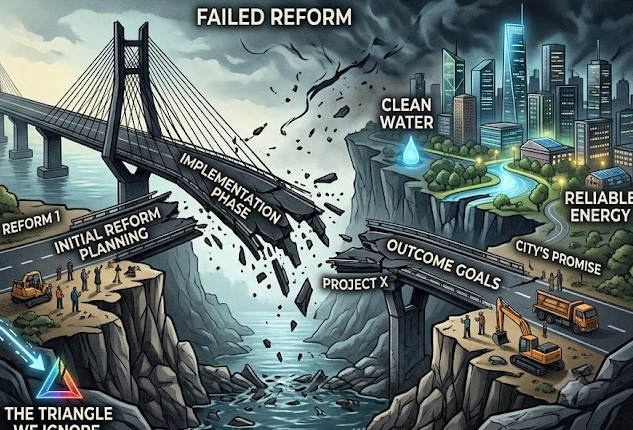
Despite remarkable advances in engineering, project management, and sustainability practice, infrastructure failures continue to occur in every region of the world. Importantly, many of these failures are not the result of inadequate engineering alone. Rather, they reflect shortcomings in how projects are conceived, evaluated, governed, and managed throughout their lifecycle.
Across the world, examples abound of infrastructure that met technical specifications yet failed to deliver its intended public value. Some projects have imposed unsustainable maintenance burdens on governments. Others have displaced communities without adequate engagement or compensation, degraded ecosystems that supported local livelihoods, or proved vulnerable to climate conditions that could reasonably have been anticipated. In other cases, infrastructure has been delivered successfully but has failed to stimulate the economic transformation or social benefits originally envisioned.
International evidence consistently shows that many infrastructure challenges originate long before construction begins. Weak project preparation, fragmented decision-making, insufficient stakeholder engagement, poor governance, inadequate risk assessment, and limited integration of environmental and social considerations continue to undermine project performance across sectors.
Nigeria reflects many of these global challenges. Significant investments have expanded transport networks, energy systems, urban infrastructure, and public facilities. Yet persistent issues—including maintenance backlogs, flooding, erosion, project delays, cost overruns, community disputes, environmental degradation, and underutilised assets—demonstrate that delivering infrastructure is only one part of achieving successful development outcomes.
These experiences do not suggest that engineering has failed. On the contrary, they demonstrate that engineering excellence alone cannot resolve increasingly interconnected environmental, economic, social, governance, and resilience challenges. Infrastructure succeeds when these dimensions are considered together rather than sequentially or in isolation.
This insight has emerged repeatedly throughout my own professional experience working with governments, multilateral development banks, financial institutions, and development partners across seventeen African countries. Whether developing climate policy, designing environmental and social management systems, supporting infrastructure resilience, or advising on national development strategies, one observation has remained remarkably consistent: institutions generally understand what sustainable infrastructure should achieve, but they often struggle with how to integrate these objectives into practical infrastructure decisions.
That implementation gap—not a lack of ambition—is the central challenge this series seeks to address.
In my view, this provides a much stronger foundation for the series because it does not begin with FIPRE. Instead, it first establishes why infrastructure matters, explains how expectations have evolved, recognises ESG as a major advance, and only then identifies the implementation gap. That narrative makes readers much more receptive to FIPRE in the subsequent volumes because the framework emerges as a response to a demonstrated problem rather than the starting premise.
Here's the continuation in the same tone and structure. The aim is to avoid overselling FIPRE, present it as a measured scholarly contribution, and create a natural transition to Volume II.
Lessons from Professional Practice and the Integration Challenge
The case for improving infrastructure decision-making is not based solely on academic literature or international policy discussions. It is also informed by decades of professional practice across diverse institutional, geographic, and sectoral contexts.
Throughout my career in environmental management, climate policy, infrastructure governance, engineering, and sustainable development, I have worked with governments, development finance institutions, regulators, private-sector organisations, and communities on projects ranging from national policy development to infrastructure planning, environmental and social risk management, climate resilience, institutional capacity building, and regulatory reform. These experiences have reinforced an important observation: the greatest challenges facing infrastructure are rarely attributable to a single discipline or technical deficiency.
Engineers generally understand how to design safe and reliable assets. Economists can evaluate financial viability and broader economic impacts. Environmental specialists identify ecological risks and mitigation measures. Social practitioners assess community impacts and stakeholder engagement. Governance institutions establish procurement rules, oversight mechanisms, and accountability frameworks. Climate scientists provide increasingly sophisticated projections of future risks.
Each discipline contributes valuable knowledge. Yet these perspectives are frequently developed through separate processes, assessed using different methodologies, and implemented under different institutional mandates. Integration often occurs late in project development, after fundamental design decisions have already been made, or is treated primarily as a compliance exercise rather than a core design consideration.
The consequence is not necessarily poor engineering, poor governance, or inadequate environmental management. Rather, it is fragmented decision-making.
This fragmentation is particularly evident in infrastructure projects where technical objectives are achieved, but broader societal outcomes fall short of expectations. A transport corridor may improve connectivity while increasing flood vulnerability. A water supply project may meet engineering specifications but prove financially unsustainable because lifecycle maintenance costs were underestimated. An energy project may strengthen electricity generation while creating avoidable social tensions due to insufficient stakeholder engagement. Conversely, projects designed with strong environmental and social safeguards may struggle because technical reliability or operational sustainability received insufficient attention.
These examples illustrate a common pattern. Infrastructure performance depends not only on the quality of individual assessments but also on the quality of their integration.
Professional experience across multiple African countries has consistently demonstrated that institutions rarely lack technical guidance. International standards, engineering codes, safeguard policies, sustainability frameworks, and regulatory requirements are widely available. The greater challenge lies in helping decision-makers synthesise these diverse perspectives into coherent choices that can be implemented consistently throughout the infrastructure lifecycle.
This observation aligns with a growing body of international scholarship emphasising systems thinking, integrated planning, lifecycle management, resilience, and adaptive governance. Collectively, these fields suggest that infrastructure should be understood as an interconnected socio-technical system rather than a collection of isolated engineering assets.
The practical implication is clear. Better infrastructure requires better integration.
Why Better Decisions Matter
Infrastructure decisions create consequences that extend far beyond the completion of construction.
A decision made during project conception may influence maintenance requirements for decades. Choices regarding alignment, location, materials, drainage, energy efficiency, ecosystem protection, accessibility, procurement, financing, or community engagement can shape environmental performance, operating costs, public acceptance, resilience to climate change, and economic opportunity throughout an asset's lifecycle.
Because these decisions have long-term and often irreversible consequences, improving infrastructure outcomes depends less on correcting problems after construction than on making better decisions before construction begins.
This perspective represents a subtle but important shift.
Traditional infrastructure management has often concentrated on improving project delivery—delivering projects faster, reducing costs, strengthening quality assurance, or improving construction supervision. These remain essential objectives. However, they cannot compensate for weaknesses embedded within earlier strategic decisions.
An efficiently delivered project based on incomplete or fragmented decision-making may still generate avoidable environmental impacts, social inequities, fiscal pressures, or resilience challenges. Conversely, projects that integrate technical, environmental, economic, governance, and social considerations from the outset are generally better positioned to deliver lasting value while reducing lifecycle risks.
The emphasis, therefore, shifts from correctly building infrastructure to deciding what the infrastructure should achieve and how competing objectives should be balanced before detailed engineering design is finalised.
In this sense, infrastructure decision-making becomes a strategic capability rather than simply an administrative process. It requires multidisciplinary collaboration, transparent governance, evidence-based analysis, and an appreciation of long-term public value.
This is increasingly consistent with the direction of international infrastructure practice. Development finance institutions now emphasise project preparation, lifecycle thinking, climate resilience, stakeholder engagement, and governance as critical determinants of project success. Investors seek greater assurance regarding environmental, social, and governance performance. Governments face growing expectations to demonstrate value for money while advancing national development priorities and international sustainability commitments.
The question is no longer whether these considerations matter. The question is how to integrate them systematically into infrastructure decisions.
Introducing the FIPRE Framework
It is within this context that the Function, Impact, Prosperity, Resilience, and Equity (FIPRE) Framework has been developed.
FIPRE did not emerge from dissatisfaction with engineering standards, ESG principles, sustainability frameworks, or existing institutional guidance. On the contrary, it draws extensively upon these well-established bodies of knowledge. International engineering standards provide the technical foundations for safe and reliable infrastructure. ESG has strengthened environmental stewardship, social responsibility, and governance. Sustainability science has expanded understanding of long-term environmental and societal outcomes. Resilience research has highlighted the need to prepare infrastructure for uncertainty and climate change. Development economics has deepened appreciation of infrastructure's role in productivity, inclusion, and prosperity.
Each has made an important contribution.
FIPRE begins from the premise that these contributions are complementary. Its purpose is not to replace existing frameworks but to help integrate them into a coherent decision architecture that supports infrastructure planning, appraisal, design, implementation, operation, and long-term asset management.
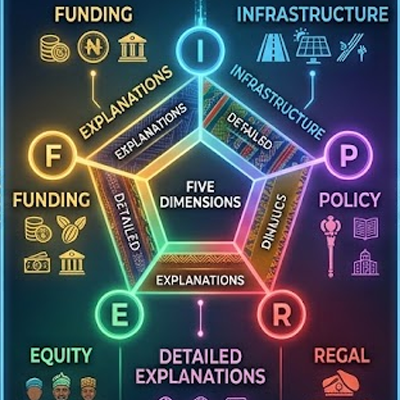
The framework is organised around five interdependent dimensions of infrastructure value:
Function, which considers technical performance, safety, reliability, operational effectiveness, and engineering quality.
Impact, which examines environmental stewardship, social outcomes, and the broader consequences of infrastructure for communities and ecosystems.
Prosperity, which evaluates the contribution of infrastructure to economic productivity, financial sustainability, livelihoods, and long-term development.
Resilience, which assesses the capacity of infrastructure to anticipate, withstand, adapt to, and recover from changing environmental, climatic, technological, and socioeconomic conditions.
Equity, which considers fairness, accessibility, inclusion, participation, and the distribution of infrastructure benefits and burdens across society.
Together, these dimensions encourage the evaluation of infrastructure not only by what it does but also by the enduring value it creates.
Importantly, FIPRE should be understood as an evolving decision framework. Its continued refinement will depend upon practical application, empirical research, institutional learning, and engagement with engineers, policymakers, researchers, investors, regulators, and communities. It is offered as a contribution to the continuing evolution of infrastructure decision science rather than as a definitive or exclusive solution.
Conclusion and Bridge to Volume II
Infrastructure has entered a period of profound transformation.
The challenges confronting governments and practitioners are increasingly interconnected. Climate change influences infrastructure resilience. Social inclusion affects project legitimacy. Governance shapes public confidence. Economic sustainability determines long-term operational performance. Environmental stewardship influences ecosystem services upon which communities and economies depend.
These dimensions can no longer be treated as separate considerations addressed by different institutions at different stages of project development. They must become part of a more integrated approach to infrastructure decision-making.
The evolution of ESG, sustainability science, resilience thinking, lifecycle management, and systems engineering demonstrates that this transformation is already underway. The next step is to strengthen the practical integration of these complementary perspectives so that infrastructure decisions consistently translate strategic aspirations into measurable public outcomes.
This is the challenge to which FIPRE responds.
The volumes that follow move from diagnosis to application. They examine the conceptual foundations of the FIPRE Framework, explain its underlying principles and decision architecture, and explore how governments, engineers, investors, regulators, and communities can apply an integrated approach to planning, evaluating, delivering, and managing infrastructure that creates enduring public value.
The ambition is not simply to build infrastructure that performs well today, but to help shape infrastructure systems that support prosperous, resilient, equitable, and sustainable societies for generations to come.
Dr. Eugene Itua
Dr. Eugene Itua is a sustainability expert with over 28 years of experience advising governments and development partners across Africa on climate finance, infrastructure governance, and policy development. He co-led the technical team supporting Nigeria's Climate Change Act 2021, spearheaded the development of Nigeria's Long-Term Low Emissions Development Strategy, and has served as a safeguard consultant for the World Bank and African Development Bank. He is an accredited trainer for UNDP SDG Impact Standards and has presented on just transition in Africa at Chatham House. He serves as Principal Advisor to AGESI (African Green Economy and Sustainability Initiative).
Get the next issue in your inbox
Sustainability reporting on people, planet and profit, delivered when new issues publish.